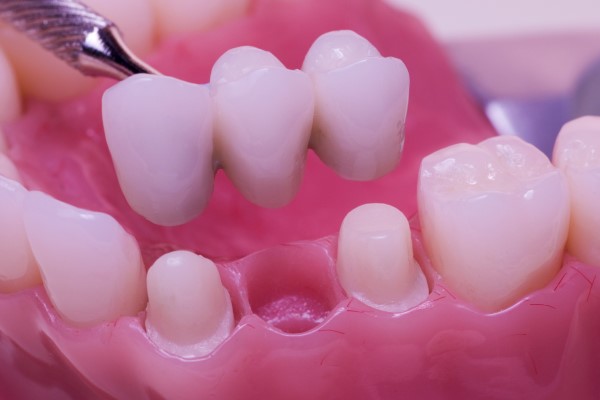
Dentists offer various missing tooth solutions, such as a dental bridge, if you want to restore your smile. Dentures are a cost-effective approach to replace missing teeth, particularly if the patient is missing most of their natural teeth, although dental bridges and implants can be more comfortable choices.
A dental bridge restores the functionality of lost teeth while maintaining their normal alignment. This is essential because teeth tend to shift toward the hole in an attempt to close the gap. Missing teeth will eventually result in misaligned teeth if they are not replaced.
Materials used for making a dental bridge
Porcelain, ceramics, zirconium, and composites are just a few of the materials used to make dental bridges. The materials used to construct these devices are frequently left to the patient's discretion. Bridges are frequently used in combination with crowns fitted on the teeth adjacent to the gap. These are called abutment teeth, and they act as anchors for the device, securing it in place.
A dental bridge's second component is a set of prosthetic teeth that are linked together. These are referred to as pontics. The placement of a bridge sometimes necessitates multiple visits to the dentist. In the first appointment, the dentist will prepare the abutment teeth for the crown that will hold the bridge in place. After that, the dentist will take imprints of the teeth and send the measurements to a laboratory, where the crowns and pontics will be fabricated. The lab generally creates the required prostheses and sends them back to the dentist in two to three weeks.
During the second session, the dentist will cover the abutment teeth with the created crowns and then link them. After it has been placed, a dental bridge cannot be removed without the assistance of a dentist.
Bridges with implant support
When a patient is missing multiple teeth, dental implants can also be used to support dental bridges. The implants are inserted into the patient's jawbone, after which, they will fuse with the bone in a process called osseointegration. When the implants are steady inside the jawbone tissue (this takes a few months), the dentist will place the dental bridge on the implant's external-facing end (usually the abutment).
The implant supports healthy jawbone tissue, which is one of the primary advantages of implant-supported bridges. When a person's natural teeth are gone, the bone tissue around the region begins to degenerate because it is no longer functional. Implants operate similarly to natural tooth roots, which helps avoid bone loss. Dental implant bridges are also more stable than traditional bridges.
In summary
Metals and porcelain or ceramics are frequently used for making bridges. To increase the bridge's strength and functionality, the ceramic or porcelain can be reinforced with metal. Even though it is not common, a dental bridge can be built entirely of metals. If you want to learn more about your options for replacing a missing tooth, book an appointment with the dentist today.
Request an appointment here: https://www.palmbeachdentistry.com or call Palm Beach Dentistry at (561) 225-2057 for an appointment in our Delray Beach office.
Check out what others are saying about our dental services on Yelp: Dental Bridges in Delray Beach, FL.
Recent Posts
Both dental bridges and implants are popular, effective tooth replacement solutions. However, there are cases in which a general dentist may recommend a dental bridge over implants. This may be due to the number of teeth missing, their location, and the strength of the underlying jawbone, among other factors. Understanding how each of these treatments…
A healthy, complete smile is not only about looking good but is also important for your overall well-being. Dental bridges can help restore the appearance and function of your teeth. However, common misconceptions about these replacement options can prevent people from understanding their benefits. Let us debunk some common myths about dental bridges.While dental bridges…
Dental bridge placement will need two visits. The patient will go through a short process that will not be invasive at all. The result will improve the patient’s dental and general health. Knowing the placement process for this restoration can help prepare you for your next visit. Here is the placement process for a dental…
Curious about dental bridges? Read on to learn more about this type of restoration. The aftermath of tooth loss can be a struggle. The loss puts extra pressure on the rest of the teeth and chewing becomes less effective. Your speech gets affected too. Fortunately, dental bridges lay out a path to restoring the look…