Can Invisalign Alter a Person’s Speech?
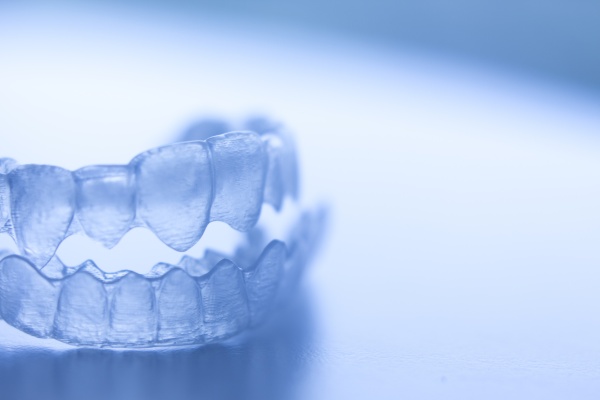
Many people considering Invisalign® have valid concerns about whether or not there will be a noticeable difference in the way they talk. According to a Nedwed study, 93% of patients did not experience any speech impediments while using Invisalign®. In a subsequent study, Nedwed found that 46% of those who did experience speech issues had no persisting trouble with speech. Any alterations experienced are usually minimal and quickly remedied.
Potential speech issues while using Invisalign®
The thing to keep in mind is speech alterations can occur while using any type of oral dental appliance. Retainers, traditional braces and other mouthpieces have the potential to affect speech because the available space inside the mouth is changed as well as the way the tongue is able to move.
Slight lisp
The speech defect known as the lisp occurs when the "s" and "z" sounds are pronounced the same way as the" th" sound. This can result when airflow in the mouth is impacted by improper placement of the tongue. Dental mouthpieces impact both the space inside the mouth and tongue motion against the teeth, so word pronunciation may be altered.
It is important to remember a lisp that has been fixed may reoccur with each new set of aligners as the teeth are continually adjusted. The tongue may need time to readjust, but it should not take as long as when the initial aligners were inserted. In some cases, an Invisalign® tray that does not fit properly can cause a lisp. That makes it crucial to keep your mouth very still during the molding process and visit a trusted dentist for treatment.
Change in speech style
Because the mouth feels different, patients may at first speak more slowly and slur words. It will take more work to talk quickly and enunciate. Although it may seem initially awkward, talking is actually the key to returning to a normal speech style. The faster the tongue gets used to functioning with the aligners in place, the faster any alterations in speech will disappear.
Dental appliances can change speech style by adding thickness to the roof of the mouth, as well as to the front and backside of the teeth. The good news about Invisalign® aligners is:
- They are made of very thin plastic
- They fit extremely snugly
- They only cover the tooth surface
This means any speech changes are typically small and will naturally fade with time. Everyone adjusts differently to these aligners. Some have speech issues for the first few hours while others take several weeks to speak normally again.
Conclusion
The potential benefits provided by Invisalign® treatment typically far outweigh any slight awkward feelings or speech alterations. In most cases, aligners are far less invasive and cause fewer speech issues than other dental mouthpieces. Any changes in speech resulting from aligners usually do not last long and are simple to correct. The effects of a new set of aligners on speech can be remedied more quickly by frequent talking.
Are you considering Invisalign® in the Delray Beach area? Get more information at https://www.palmbeachdentistry.com.
Check out what others are saying about our services on Yelp: Read our Yelp reviews.
Recent Posts
Cosmetic dental services can transform a patient’s smile for the better. For those who want only subtle changes, these services can be used to enhance the natural look of the smile. Either way, knowing when to see a dentist for cosmetic dental services starts with learning the basics about these treatments.There is no wrong time…
Acting quickly by consulting an emergency dentist when facing the signs of dental implant rejection helps to protect the jawbone and surrounding teeth. While implants offer a permanent, high-success solution for missing teeth, the body occasionally struggles to integrate the titanium post with the natural bone. This complication requires immediate attention to halt the spread…
Cosmetic dental services provide a wide range of options to improve the appearance and function of the smile. From subtle enhancements to full transformations, these treatments help patients achieve lasting confidence through healthy, attractive teeth. A general dentist can guide individuals through various techniques designed to correct imperfections and support overall oral wellness.Cosmetic dental services…
When exploring cosmetic dental services, professional teeth whitening often stands out as a popular option for achieving a brighter smile. While over-the-counter products promise convenience, cosmetic dental services from a professional offer effective solutions tailored to individual needs. Understanding the differences between dentist procedures and over-the-counter whitening options helps patients make informed decisions about their…